Are Area Rugs Safe for Babies and Toddlers? What Every Chino Parent Should Know
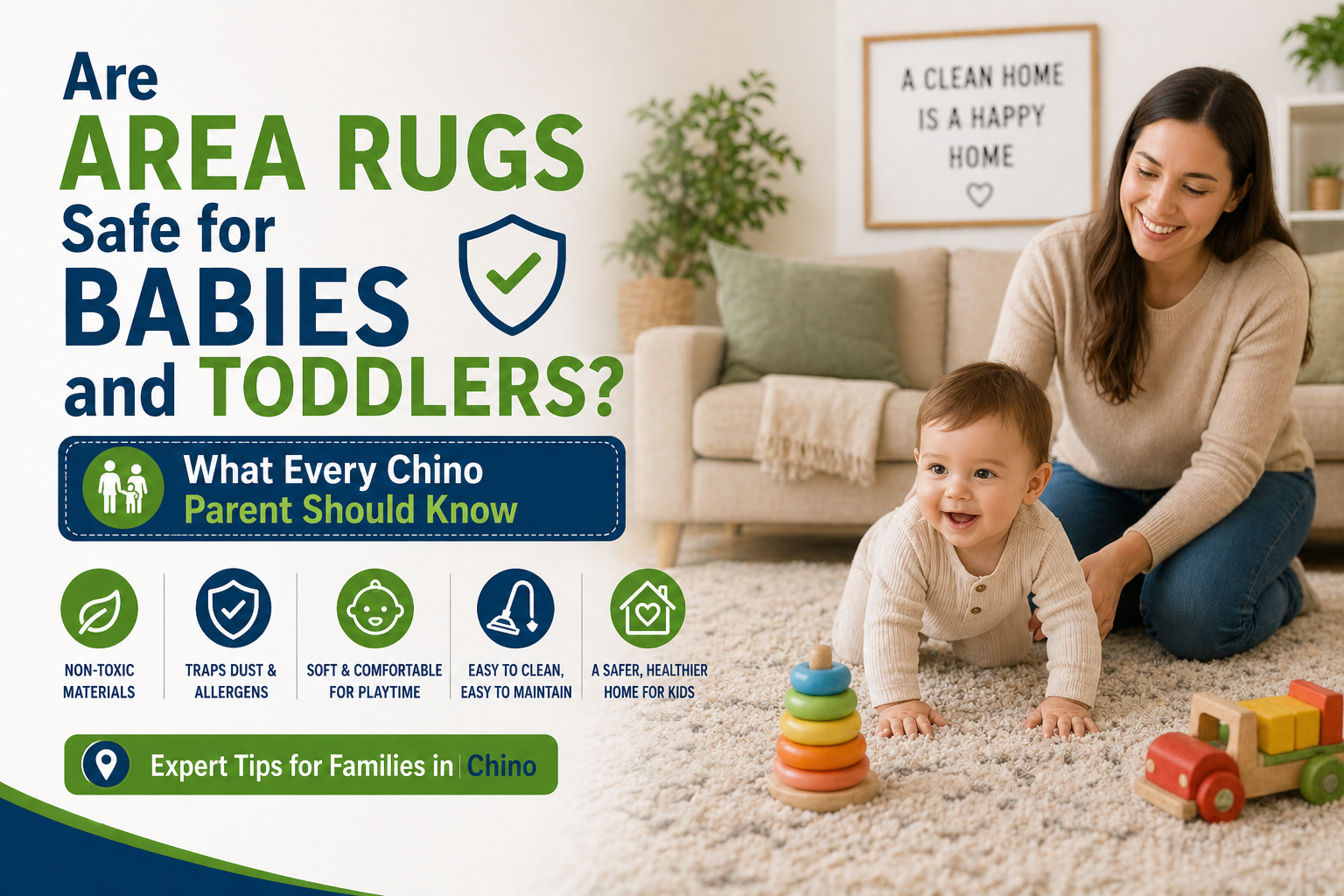
When you bring a baby home, you start looking at your living space differently. Outlet covers, cabinet locks, baby gates — the list of safety considerations grows quickly. But one item most parents never think twice about is the area rug their baby will spend hours crawling, rolling, and playing on every single day.
Area rugs can be wonderfully safe surfaces for infants and toddlers — or they can be concentrated reservoirs of allergens, bacteria, mold spores, and chemical residue that your child is in direct contact with during the most critical developmental window of their life. The difference comes down to one thing: how clean the rug actually is.
This guide helps Chino parents understand the real risks, what to look for, and how to keep area rugs genuinely safe for the youngest members of the family.
What Do Area Rugs Collect That Makes Them a Concern for Babies?
Area rugs function as passive filters — trapping airborne particles that would otherwise recirculate in indoor air. That’s useful in theory, but the accumulation it creates is a direct health concern for infants who spend the majority of their waking hours at rug level.
Over weeks and months, area rugs in family homes accumulate:
- Dust mites and their allergenic waste particles — the most common cause of year-round indoor allergies in young children
- Pet dander — present in virtually all Inland Empire homes, even those without pets, carried in on clothing and shoes
- Mold spores — particularly in rugs near entryways, bathrooms, or anywhere moisture exposure occurs
- Bacteria — from food residue, tracked-in soil, and pet contact
- Pesticide and herbicide residue — tracked in from lawns, parks, and outdoor surfaces
- Fine particulate matter — from outdoor air, construction activity, and vehicle emissions common throughout the Inland Empire
For adults, this accumulation is a background concern. For a baby spending four to six hours daily on the rug’s surface — pressing their face into it, putting their hands in their mouth directly after touching it — the exposure is direct and concentrated.
According to the EPA, children are disproportionately affected by indoor pollutants because they breathe more air relative to body weight, spend more time at floor level, and have immune and respiratory systems that are still developing. The rug your baby plays on is not a neutral surface — it is one of the highest-contact environmental exposures in their daily life.
Which Area Rug Types Are Safest for Babies and Toddlers?
What rug materials are safest for infants?
From a health and safety standpoint, rug material matters — but cleanliness matters more than material choice.
Natural fiber rugs — wool, cotton, jute — are generally low in VOC off-gassing and are not treated with the same chemical finishes as synthetic alternatives. Wool in particular has natural antimicrobial properties and resists dust mite colonization better than synthetic fibers at equivalent cleanliness levels. However, natural fiber rugs are more absorbent — meaning spills and moisture penetrate more quickly and create a faster path to mold and bacteria growth if not addressed promptly.
Synthetic rugs — nylon, polyester, polypropylene — are more resistant to moisture and easier to spot clean. However, new synthetic rugs can off-gas VOCs from manufacturing treatments, adhesives, and dyes for weeks after purchase. If introducing a new synthetic rug to a baby’s environment, airing it out in a well-ventilated space for several days before use reduces this exposure meaningfully.
Avoid rugs with thick latex or rubber backing in infant environments — latex backing can harbor mold in humid conditions and some latex products contain chemical additives that are not appropriate for direct infant contact.
Regardless of material, the single most important factor for infant safety is regular professional cleaning that removes the biological and chemical accumulation that builds up in any rug type over time.
How often should area rugs be professionally cleaned when babies are present?
For households with infants or toddlers, professional area rug cleaning every 6 months is the recommended interval. This frequency removes accumulated dust mites, allergens, bacteria, and residues before they reach concentrations that affect the youngest, most vulnerable family members.
Between professional cleans, vacuuming area rugs 2–3 times per week with a HEPA-filter vacuum maintains surface hygiene without redistributing fine particles into the air your baby breathes.
Professional area rug cleaning that uses gentle, fiber-appropriate methods and non-toxic solutions is the most effective way to maintain a genuinely safe surface for babies and toddlers between replacements.
The Hidden Risk Most Parents Miss: Rug Backing and Moisture
Surface cleaning — vacuuming, spot treatment, even consumer rug shampooers — addresses the top layer of a rug. What most parents don’t realize is that the rug backing is a separate environment entirely.
Spills that penetrate the pile and reach the backing create moisture conditions ideal for mold and bacteria growth. In Southern California’s warm indoor temperatures — consistent year-round across Chino, Eastvale, Ontario Ranch, and the wider Inland Empire — moisture-contaminated rug backing can develop mold growth within 24–48 hours of a significant spill that isn’t fully extracted.
The signs of backing contamination are not always visible from the top. Rugs with contaminated backing may:
- Smell musty even after surface cleaning
- Feel damp on the underside in the area of previous spills
- Show discoloration or stiffness on the backing material
- Produce worsening allergy symptoms in children who play on them
For infants and toddlers who spend extended time face-down on rug surfaces, mold spores in the backing represent a direct inhalation risk. If you suspect backing contamination, professional rug cleaning with full extraction — not surface treatment — is the appropriate response.
Are Area Rugs Safe for Babies in Chino and the Inland Empire?
The specific environmental conditions of Chino and the surrounding Inland Empire create rug contamination challenges that parents should be aware of.
Construction activity in growing communities like The Preserve, New Model Colony, North Eastvale, and Ontario Ranch generates fine silica dust and construction particulate that enters homes on shoes and through ventilation — settling into rug fibers at elevated rates compared to established neighborhoods.
Santa Ana wind seasons bring periods of high outdoor particulate concentration that significantly increases the allergen and fine dust load entering homes across South Chino Hills, Eagle Glen, Rolling Ridge, and Rancho Etiwanda. Families in these communities should treat the weeks following major wind events as a prompt to vacuum area rugs thoroughly and assess whether professional cleaning is warranted sooner than scheduled.
High pet ownership throughout the Inland Empire — across Norco, Chino Hills, Arlanza, Mission Grove, and Corona — means pet dander is nearly universal in area rug environments, even in pet-free homes where visitors bring it in on clothing.
Warm, consistently temperate conditions across the region support year-round dust mite activity in rugs. Unlike colder climates where mite populations decline seasonally, Inland Empire homes maintain conditions favorable to dust mite reproduction every month of the year — making twice-yearly professional cleaning more important than the national annual average suggests.
Blake Washington and the Neighborhood Hero Cleaning team provide professional area rug cleaning across Chino and the Inland Empire — using gentle, fiber-safe methods appropriate for every rug type, with non-toxic solutions that are completely safe for infants and toddlers once dry.
Is It Safe to Use a New Area Rug in a Baby’s Room Right Away?
How long should a new rug air out before a baby uses it?
New rugs — particularly synthetic fiber rugs — should be aired out for a minimum of 72 hours in a well-ventilated space before being placed in an infant’s environment. Manufacturing treatments, adhesive compounds, and synthetic dyes can off-gas VOCs at elevated levels for days to weeks after purchase. The smell most people associate with new rugs is this off-gassing, and while the concentration diminishes quickly with ventilation, reducing the baby’s exposure during the peak period is straightforward and worthwhile.
For natural fiber rugs — wool, cotton, jute — the off-gassing concern is significantly lower. A 24-hour airing in a ventilated space is generally sufficient before introducing them to an infant’s room.
Can I machine wash a baby’s area rug instead of professional cleaning?
Small rugs designated as machine washable can be laundered at home — follow manufacturer guidelines on temperature and drying. However, machine washing does not replicate the deep extraction that professional cleaning provides. It removes surface soil and some surface allergens but does not penetrate backing material, does not remove embedded dust mite populations at depth, and carries a risk of incomplete drying that can promote mold growth in the backing if not fully dried before returning to floor use.
For rugs larger than approximately 4×6 feet, machine washing is typically not practical and professional cleaning is the appropriate method. The area rug cleaning process uses extraction methods and controlled drying that eliminate the mold risk associated with home washing.
6 Practical Steps to Keep Your Baby’s Rug Safe Between Professional Cleans
- Vacuum 2–3 times per week using a HEPA-filter vacuum. Surface dander, dust, and debris accumulation is meaningfully slowed by consistent vacuuming — reducing the load that professional cleaning must address.
- Address liquid spills immediately and fully. Blot from the outside edge inward with a clean cloth — never rub. Use a dry cloth to absorb as much moisture as possible from the backing before allowing the rug to dry. Faster extraction means less moisture reaching the backing.
- Lift and check the underside regularly. Flip the rug monthly and inspect the backing for discoloration, stiffness, or damp spots that indicate moisture contamination you may not have noticed.
- Use a breathable rug pad. Rug pads that allow airflow beneath the rug reduce moisture trapping between the rug and the floor — one of the primary causes of backing mold in family homes.
- Rotate the rug every few months. Even rotation distributes wear and soil accumulation more evenly — making professional cleaning more uniformly effective across the entire rug surface.
- Schedule professional cleaning before and after high-allergen seasons. In the Inland Empire, pre-spring and pre-fall cleaning provides the cleanest surface entering peak allergen periods — when pollen and outdoor particulate load in indoor environments is highest.
Ready to Make Your Baby’s Rug Genuinely Safe in Chino?
A clean area rug is one of the safest surfaces in your home for a baby or toddler. An uncleaned rug is one of the most concentrated allergen and bacteria reservoirs. The difference is regular professional cleaning that reaches what vacuuming cannot.
Neighborhood Hero Cleaning serves families with infants and young children across Chino, Chino Hills, Eastvale, Ontario, Rancho Cucamonga, Corona, Norco, and the surrounding Inland Empire. Every area rug cleaning service uses gentle, fiber-appropriate methods and non-toxic solutions — safe for the youngest family members once dry, with a free deodorizer included on every visit.
Call Blake at (951) 800-3827 or request a free quote online. Same-day service available.
Frequently Asked Questions
What temperature kills dust mites in a rug? Dust mites are killed at temperatures above 130°F (54°C). Professional hot-water extraction cleaning reaches temperatures that eliminate dust mite populations throughout the rug pile. Washing machine cycles at high temperature can achieve this for small, machine-washable rugs — but professional extraction is required for larger rugs and provides the additional step of full extraction rather than just heat exposure.
Can a dirty area rug cause eczema in babies? Dust mite allergens are among the most well-documented triggers for eczema flare-ups in infants and young children. Prolonged skin contact with dust mite-contaminated surfaces — which an area rug represents during extended floor play — can trigger and maintain eczema inflammation. Regular professional cleaning that reduces dust mite populations to low levels is a recommended environmental intervention for eczema-prone infants, alongside other measures advised by a pediatric dermatologist.
How long after professional area rug cleaning is it safe for my baby to use the rug? Rugs cleaned with non-toxic, eco-friendly solutions are safe for babies once fully dry — typically 4–8 hours depending on rug thickness and drying conditions. Neighborhood Hero uses biodegradable solutions that leave no harmful residue. Ensure the rug is completely dry to the touch, including the backing, before returning it to use.
Should I put a rug in my baby’s nursery? Yes — a clean rug in a nursery provides cushioning, reduces noise transmission, and creates a warmer play surface than hard flooring. The key is establishing a regular cleaning and vacuuming schedule from the day the rug is introduced, rather than waiting until contamination is visible or odor is detectable.
Is jute or sisal safe for babies? Natural plant-fiber rugs like jute and sisal have low chemical concerns but their coarse texture makes them unsuitable for infants who crawl — the fiber can abrade delicate skin. For crawling babies, softer natural fibers like wool or cotton, or soft synthetic options, are more appropriate. Regardless of fiber choice, regular professional cleaning maintains safety.
Author: Blake Washington, Owner — Neighborhood Hero Cleaning, Chino, CA. Serving families across the Inland Empire with professional carpet, upholstery, and area rug cleaning.