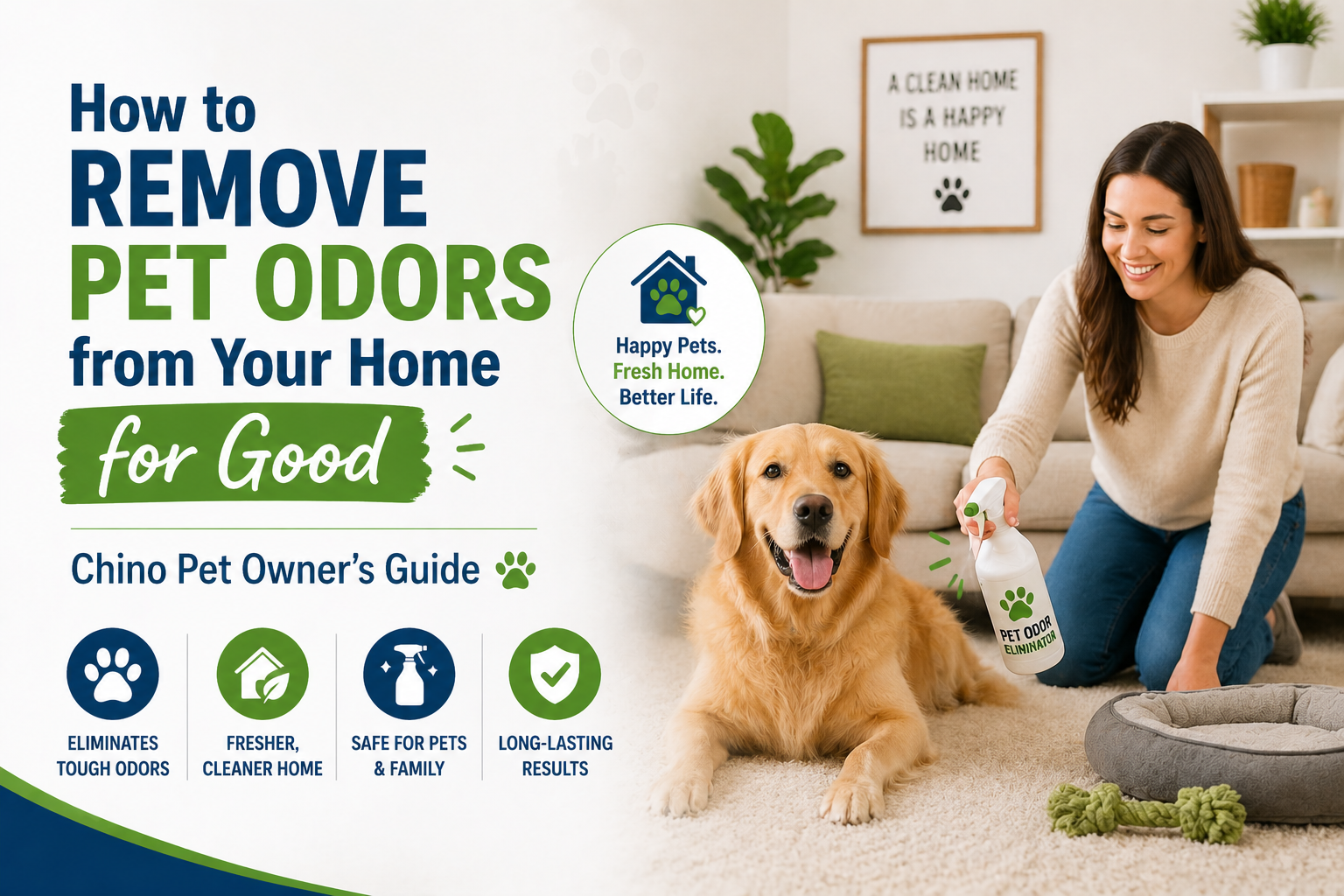
How to Remove Pet Odors from Your Home for Good — Chino Pet Owner's Guide
Every pet owner in Chino knows the feeling. You walk through the front door and catch a smell that no amount of candles, sprays, or open windows seems to permanently fix. Pet odors are one of the most persistent home maintenance challenges families face — and the reason they keep coming back has nothing to do with how often you clean the surface. It has everything to do with what’s happening beneath it.
This guide explains why pet odors return, what actually eliminates them, and how Chino families can create a genuinely fresh home environment for both their family and their pets.
Why Do Pet Odors Keep Coming Back?
Pet odors — particularly urine — return because the source is never fully removed by surface cleaning. When a pet has an accident on carpet, the liquid doesn’t just sit on the surface. It penetrates through the carpet fiber, through the backing, and into the padding beneath — sometimes reaching the subfloor. What you see on the surface represents only a fraction of the contamination.
Urine contains uric acid crystals that bond to carpet fibers, padding, and subfloor material. When these crystals dry, the odor temporarily diminishes. But when humidity rises — from mopping, steam, humid weather, or simply breathing in an enclosed room — the crystals reactivate and release odor again. This is why pet-affected areas smell worse on warm, humid days even after repeated surface treatment.
According to the EPA, pet dander and urine residue are among the most common contributors to poor indoor air quality in American homes. In Southern California’s Inland Empire — where homes stay warm year-round and air conditioning recirculates indoor air continuously — pet odors accumulate faster and dissipate more slowly than in cooler climates.
Consumer enzyme sprays help — but they’re formulated for surface application. They rarely penetrate deeply enough to reach uric acid crystals embedded in carpet padding or subfloor. Professional treatment does.
What Actually Eliminates Pet Odors Permanently?
Permanent pet odor removal requires two things that consumer products cannot deliver together: deep penetration and full extraction.
Professional pet odor removal uses a two-step process. First, an enzyme-based treatment solution is applied directly to the affected area and allowed to dwell — giving the enzymes time to break down uric acid crystals, organic waste, and odor-causing bacteria at a molecular level. Second, professional hot-water extraction removes the broken-down contamination from deep within the fiber, backing, and padding — pulling out what the enzyme treatment has dissolved.
This process is fundamentally different from surface spraying. The enzyme solution is applied at professional concentration and penetrates the full depth of contamination. The extraction equipment operates at temperatures and pressures that consumer tools cannot match — ensuring the dissolved material is fully removed rather than redistributed.
For heavily saturated areas — particularly from repeated accidents in the same location — a professional assessment can determine whether the padding beneath the carpet needs replacement. In some cases, padding replacement combined with subfloor treatment is the most cost-effective permanent solution. A professional will always give you an honest assessment before recommending this step.
The Most Common Pet Odor Sources in Family Homes
What surfaces hold pet odors beyond carpet?
Pet odors don’t limit themselves to carpet. In Chino family homes, the most common odor sources beyond carpet include:
Upholstery and sofas. Pets that sleep on or near furniture transfer dander, oils from their coat, and occasional accident residue into fabric fibers and cushion fill. The same wicking and reactivation dynamic that affects carpet applies to upholstered furniture — surface treatments address the top layer but leave odor sources intact in the fill material.
Area rugs. High-traffic rugs in living rooms, entryways, and bedrooms collect pet dander, hair, and odors from daily contact. Natural fiber rugs — wool, jute, and cotton — are particularly absorbent and hold odors more stubbornly than synthetic alternatives.
Tile grout lines. In homes where pets have accidents near tile floors, urine seeps into porous grout lines and is almost impossible to remove with standard mopping. Professional tile and grout cleaning with targeted antimicrobial treatment is required to eliminate odor from grout permanently.
For comprehensive odor elimination — especially in homes with multiple pets — professional stain and odor removal that addresses all affected surfaces simultaneously produces the most lasting results.
Can pet odors affect my family’s health?
Yes — particularly for children and allergy-sensitive family members. Pet dander is one of the most common triggers for allergic rhinitis and asthma in children. The Asthma and Allergy Foundation of America estimates that three in ten people with allergies have allergic reactions to cats and dogs — and pet dander persists in home environments for months after exposure because it adheres to fabric surfaces and remains airborne for extended periods.
Beyond dander, ammonia from urine off-gassing at elevated concentrations can irritate respiratory systems — particularly in young children who spend more time at floor level. Eliminating the uric acid source through professional treatment removes the ammonia-generating material rather than simply covering it.
How do I know if the padding under my carpet needs replacing?
There are three clear indicators that carpet padding has been saturated beyond what surface cleaning can address:
- The odor is strongest when you press down on the carpet — this indicates contamination in the padding that releases when compressed
- Multiple accidents have occurred in the same area over time — repeated saturation without professional treatment leads to cumulative padding contamination
- Professional surface treatment has been performed but odor returns within days — this strongly suggests the padding is the remaining odor source
A professional assessment during a stain and odor removal service will identify padding contamination and provide honest guidance on the most cost-effective path forward.
Pet Odor Removal Across Chino and the Inland Empire
Pet ownership rates across Chino, Norco, Eastvale, Corona, and the wider Inland Empire are among the highest in Southern California — Norco in particular is known regionally for its equestrian culture and high density of pet-owning households. For families in these communities, managing pet odors is an ongoing maintenance challenge rather than a one-time fix.
In newer communities like Ontario Ranch, The Preserve, North Eastvale, and Temescal Valley — where carpet is common throughout open-plan living areas — a single pet with an ongoing accident pattern can affect large portions of the home’s flooring before the full extent of contamination becomes apparent. Early professional treatment is significantly more cost-effective than delayed intervention after extensive saturation.
Established neighborhoods across South Chino Hills, Arlanza, Orangecrest, Mission Grove, and Rancho Etiwanda often have older carpet that has experienced years of pet use. In these homes, professional treatment combined with an honest assessment of carpet and padding condition helps families make informed decisions about whether to clean or replace — and what sequence of treatment makes the most financial sense.
Blake Washington and the Neighborhood Hero Cleaning team serve pet-owning families across Chino and the Inland Empire with professional stain and odor removal — using enzyme-based treatments that neutralize odors at the source, not on the surface. Free deodorizer included on every visit, eco-friendly solutions safe for pets and children, 100% satisfaction guaranteed.
6 Habits That Help Pet Owners Manage Odors Between Professional Cleans
Consistent daily habits significantly reduce odor buildup between professional treatments:
- Clean accidents immediately and thoroughly. Absorb as much liquid as possible with paper towels or a clean cloth before applying any treatment. The more you remove manually, the less reaches the padding.
- Use a professional-grade enzyme spray for spot treatment. Consumer enzymes work on fresh accidents if applied immediately and allowed to dwell for the manufacturer’s recommended time — usually 10–15 minutes before blotting dry.
- Vacuum pet areas 3–4 times per week. Regular vacuuming with a HEPA-filter vacuum removes surface dander, hair, and debris before it works deeper into fibers.
- Wash pet bedding weekly. Pet beds and blankets are high-concentration odor sources that transfer to nearby carpet and upholstery through contact and airflow.
- Groom pets regularly. Frequent brushing reduces shedding and dander distribution throughout the home — directly reducing the volume of allergens and odor-causing material deposited on surfaces daily.
- Schedule professional treatment before odors become embedded. The most cost-effective approach is professional cleaning on a regular schedule — every 6 months for heavy pet households — rather than waiting for odors to become severe and require more intensive treatment.
Ready to Eliminate Pet Odors in Your Chino Home for Good?
If pet odors keep coming back no matter what you try, the source hasn’t been fully removed — and no surface spray will fix what’s embedded below. Professional enzyme-based treatment combined with hot-water extraction reaches the contamination that consumer products can’t, and removes it completely.
Neighborhood Hero Cleaning serves pet-owning families across Chino, Chino Hills, Eastvale, Ontario, Rancho Cucamonga, Corona, Norco, and the surrounding Inland Empire. Every stain and odor removal service uses eco-friendly, non-toxic solutions safe for your family and your pets — with a free deodorizer treatment and 100% satisfaction guarantee on every visit.
Call Blake directly at (951) 800-3827 or request a free quote online. Same-day service available.
Frequently Asked Questions
How long does professional pet odor removal take? Most pet odor removal treatments are completed within 1–3 hours depending on the number of affected areas, the severity of contamination, and whether upholstery or rugs are included. We always provide a time estimate after the initial assessment before starting any work.
Will enzyme treatment bleach or damage my carpet? No. Professional enzyme solutions are pH-balanced and formulated specifically for carpet and fabric use. They break down organic compounds without affecting dye or fiber structure. Every treatment begins with a pre-inspection to confirm compatibility with your specific carpet type.
How soon can my pets re-enter treated areas? Once carpets and upholstery are fully dry — typically 4–6 hours after steam cleaning — treated areas are completely safe for pets. Our solutions are eco-friendly and non-toxic. There is no chemical residue that poses a risk to animals after drying.
What if my pet keeps having accidents in the same spot? Repeated accidents in the same location are usually behavioral — pets are attracted back to areas where their scent remains. Professional enzyme treatment that fully eliminates the uric acid source removes the scent marker that draws pets back, which combined with behavioral training effectively breaks the cycle.
Does professional odor removal work on old, set-in pet stains? Yes — in most cases. Older stains require longer enzyme dwell time and sometimes more than one treatment pass, but professional-grade enzyme solutions are significantly more effective on set-in contamination than consumer products. A professional assessment will give you an honest expectation before treatment begins.
Author: Blake Washington, Owner — Neighborhood Hero Cleaning, Chino, CA. Serving families and pet owners across the Inland Empire with professional carpet, upholstery, and odor removal services.